The look of an illuminated letter is decided by its construction, but whether it keeps looking good for years depends on what is inside: the LED modules, the power supply and how well the electrics are protected against water and dust. This guide explains the components of an illuminated channel letter, what the IP codes on LED products mean, and which details to agree with your manufacturer before production.
How an illuminated letter is lit
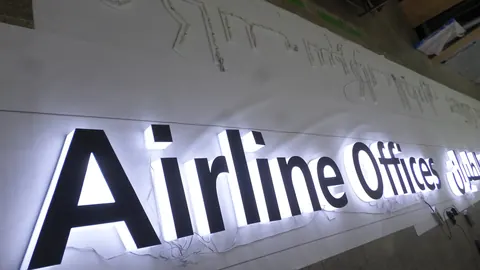
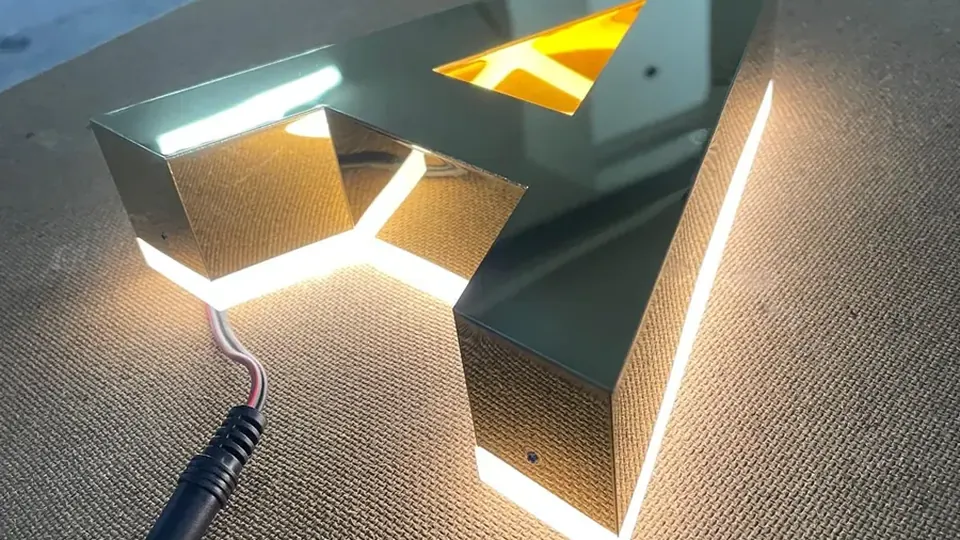
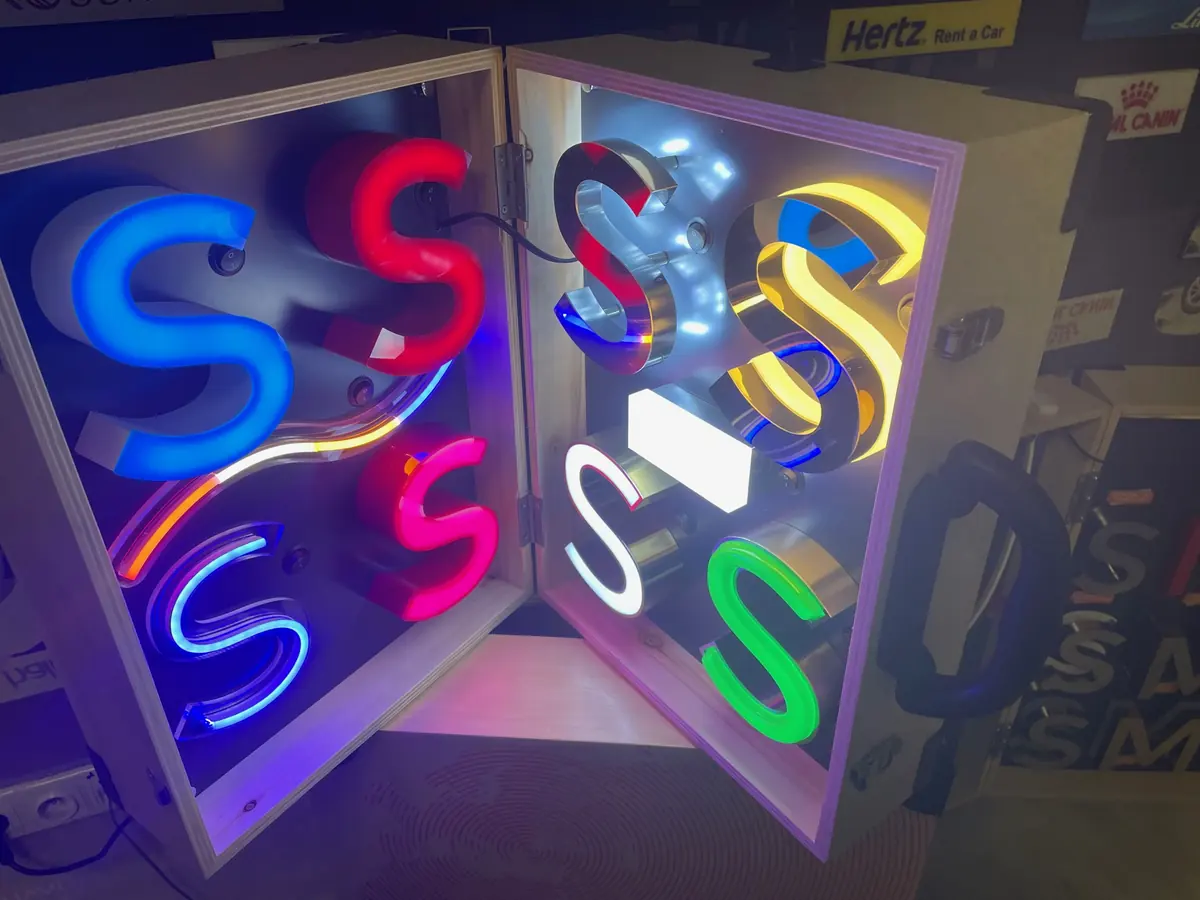
Inside a channel letter, the light source is a set of LED modules laid out on the back of the letter. In our profiles, the LEDs are fitted in the colour the job requires and the letters are delivered with a suitable power supply – for example on halo-lit SML 3 or the economy front-lit SML 5 ECO. In SML 3 EXCLUSIVE, the light of the modules is spread through a 20 mm acrylic base to give an even halo.
Three things decide how good the light looks: the number and spacing of the modules, the depth of the letter (light needs some distance to spread before it reaches the face) and the diffusing quality of the face material. Getting these in balance avoids visible hot spots and dark corners, especially in narrow strokes.
LED modules: what they are
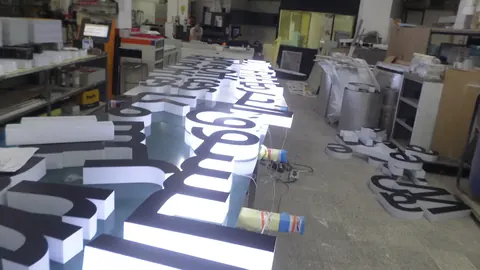
An LED module is a small sealed unit with one or more LEDs, often with a lens, mounted on a self-adhesive or screw-fixed base. Modules are connected in chains with cable between them, which makes them easy to place inside letters of any shape. Most sign modules run on low-voltage DC – commonly 12 V or 24 V – supplied by a separate power supply.
Two choices matter when you specify:
- Light colour. White LEDs come in different colour temperatures, from warm to cool white; coloured LEDs (red, blue, green and others) can intensify a coloured face. Tell your manufacturer which white or colour you need, or that the light should match a particular face colour.
- Front or back. Face-lit letters point the modules forward through the face; halo letters point them backwards onto the wall. Combination letters use both – see channel letter types.
Power supplies: from mains to low voltage
The power supply (also called LED driver or transformer) converts mains electricity into the low-voltage DC that the modules need. A few principles apply to every project:
- Size it to the load. The power supply must be rated for the total wattage of the modules it feeds. Running a unit permanently at its absolute limit shortens its life, so leave a safety margin.
- Place it where it can be reached. Power supplies are the component most likely to need replacement during a sign's life. Whether the unit sits inside a letter, in a separate housing or behind the wall, plan access for maintenance.
- Keep low-voltage cable runs reasonable. Long cables at 12 or 24 V lose voltage, which can make the furthest letters dimmer. Larger signs are often split over several power supplies or circuits.
- Match the destination country. Mains voltage, plugs and certification requirements differ between countries. Tell us where the sign will be installed.
- Leave the mains connection to a qualified electrician, following local regulations.
IP ratings explained
The IP code (Ingress Protection, defined in the international standard IEC 60529) describes how well an enclosure keeps out solids and water. It has two digits: the first for solid objects and dust, the second for water.
| IP code | Solids (first digit) | Water (second digit) | Typical use in signage |
|---|---|---|---|
| IP20 | Protected against fingers and objects over 12.5 mm | No protection | Dry indoor locations only |
| IP44 | Objects over 1 mm | Splashing water from any direction | Sheltered indoor or semi-outdoor spots |
| IP54 | Dust-protected | Splashing water | Covered outdoor locations |
| IP65 | Dust-tight | Water jets from any direction | Components exposed to rain |
| IP67 | Dust-tight | Temporary immersion (up to 1 m) | Where water can collect |
| IP68 | Dust-tight | Continuous immersion (conditions set by the manufacturer) | Special applications |
A higher number is not automatically better for every job – it usually means more sealing and cost. What matters is that every component matches its real exposure: an LED module inside a closed outdoor letter faces different conditions from a power supply mounted in the open. For outdoor illuminated letters, modules and power supplies with a rating such as IP65 or higher are a common choice; confirm the rating of each component with your manufacturer.
Even sealed letters can collect moisture from condensation. That is why outdoor letters are often designed so that water can drain away instead of standing inside the letter.
Looking after illuminated letters
LED technology has made channel letters far more economical to run and maintain than older neon and fluorescent signs, but no electrical system is maintenance-free. Keep a record of which power supply feeds which letters, make sure the units can be reached, and keep faces clean so the light is not dimmed by dirt. If one letter fails, check the power supply and the connections first.
What to agree before production
| Topic | Questions to settle |
|---|---|
| Light colour | Which white or colour? Matched to the face colour? |
| Direction | Front-lit, halo-lit or both? |
| Power supply | How many letters per unit? Where will it be mounted? |
| Environment | Indoor, sheltered or fully exposed outdoors? |
| Country | Mains voltage and local requirements at the installation site |
| Installation | Cable entry points through the wall, route to the power supply |
Include these points when you request a quote – our guide on what to send with a quote request has the full checklist, and how built-up letters are mounted covers cable entry and fixing.
Frequently asked questions
What does IP65 mean?
IP65 means the enclosure is dust-tight (6) and protected against water jets from any direction (5), according to the IEC 60529 standard. It is a common rating for components exposed to rain.
What is the difference between IP65 and IP67?
Both are dust-tight. IP65 protects against water jets; IP67 also protects against temporary immersion in water up to 1 metre.
Are the letters delivered with a power supply?
Yes. Our illuminated letters are fitted with LED modules in the required colour and supplied with a suitable power supply.
Which voltage do sign LED modules use?
Most sign LED modules run on low-voltage DC, commonly 12 V or 24 V, supplied by a separate power supply connected to the mains.